
Purchase approval automation
Keep each decision attached to the exact quotation reviewed.
Scoped pilot · Access agreed · Human approval
The working route
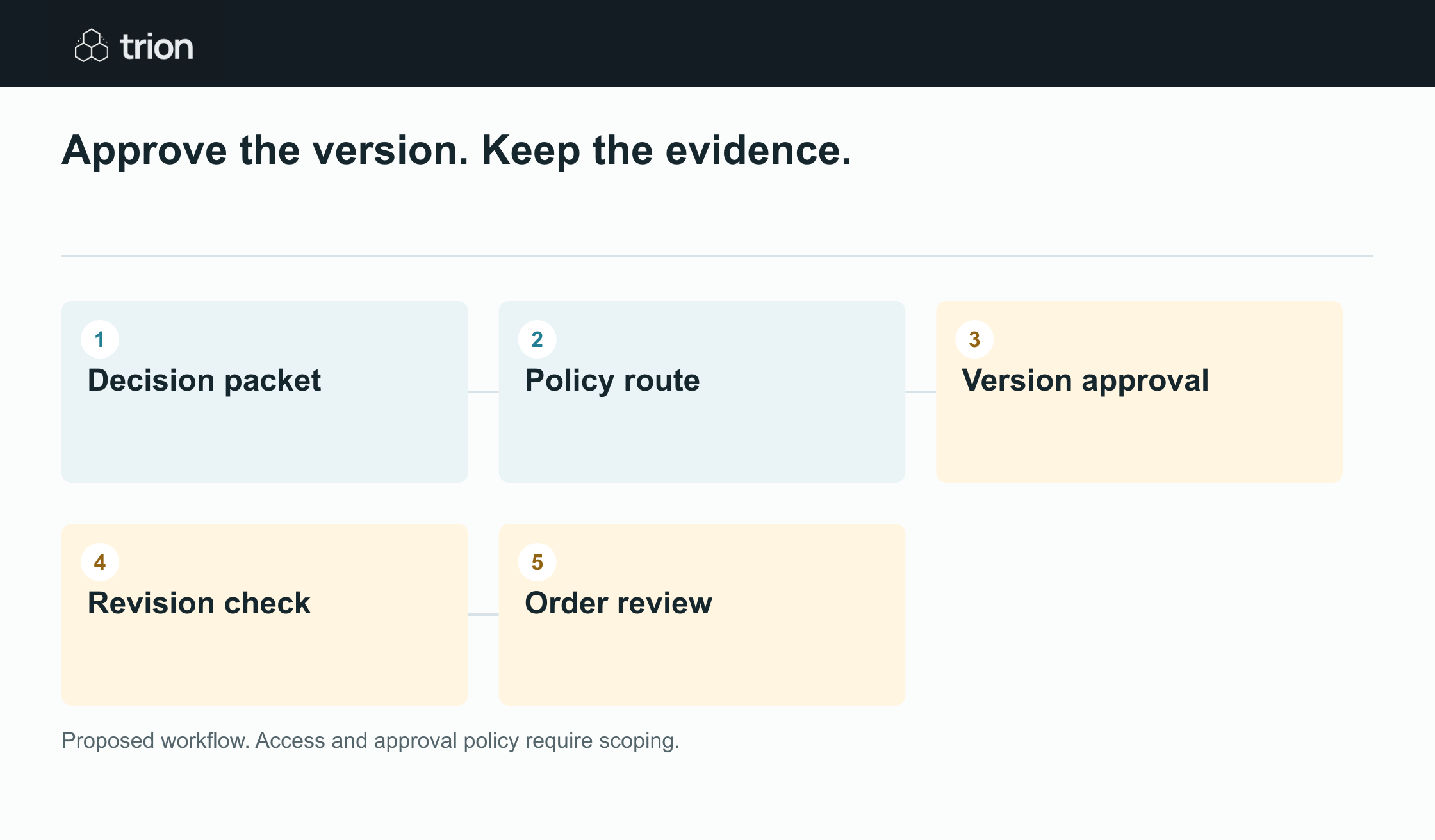
- Decision packet
- Policy route
- Version approval
- Revision check
- Order review
How each step works
Build the decision packet
Bundle the request, selected supplier, quote version, normalized line items, known costs, unresolved questions, delivery terms, payment terms, and warranty wording.
Route by an agreed policy
Use your spending thresholds, roles, and exception rules to select the reviewer. Show why the route was chosen and keep any delegation explicit.
Record a version-specific decision
Store the approver, decision, timestamp, conditions, and the exact documents and values reviewed. A request for changes remains distinct from approval.
Detect material revisions
Compare the pending purchase against the approved packet. Highlight changes to totals, quantities, bank or payment details, delivery, substitutions, and warranty terms for human review.
Review the final action
Prepare the purchase order or supplier response and verify it against the current approval. Require approval before the action is sent or committed, then preserve the resulting record.
Approve the version. Keep the evidence.
12-month warranty
6-month warranty
Deliverables & scope
- Approval matrix
- Decision packet
- Version record
- Exception queue
- Order review
- Revision tests
Full deliverables and scope
An approval should answer what was approved, by whom, and against which version. Trion can design an approval workflow that packages the purchasing decision, highlights exceptions, and checks that the pending action still matches the approved record. Changes to price, payment, delivery, or warranty return to the right reviewer.
Deliverables
- An approval matrix with roles, thresholds, escalation, and delegation rules.
- A decision packet format with a commercial terms checklist.
- A version-specific approval record and a visible change history.
- A queue for conditional approvals, missing evidence, and changed terms.
- A final review control for outgoing orders and purchasing system updates.
- Pilot scenarios covering quote revisions and approval exceptions.
Controls and limitations
- Your team defines approval authority and commercial policy. Trion implements the agreed workflow and does not supply legal or financial decisions.
- The workflow requires access to the source records and any target system; integration behavior is confirmed in a scoped pilot.
- Extraction and comparison can flag possible changes, but a person must resolve ambiguous or conflicting terms.
- Approvals do not authorize unattended payments. Sending, ordering, or committing a change stays behind the agreed review controls.
- Changed payment details, warranty terms, and other flagged conditions escalate to a named reviewer before proceeding.
Common questions
What makes an approval version-specific?
The decision records the documents and values the approver saw. If the supplier revises a material field, that new version needs review before it can become the basis for an order.
Does every edit need a new approval?
The policy should define material changes and any narrowly permitted administrative edits. Quantity, price, payment, delivery, substitution, and warranty changes usually warrant a visible review. Exceptions should be recorded rather than guessed.
Can the workflow use our existing approval thresholds?
That is the intended starting point. The pilot translates your policy into explicit routing rules, then tests normal purchases, exceptions, absent approvers, and conditional decisions.
What happens after someone approves?
The workflow checks that the pending order still matches the approved packet and prepares the next action for review. The exact send and commit controls are agreed as part of the pilot.