
The cheapest line price may not produce the cheapest comparable purchase. A useful quotation comparison preserves what each supplier actually quoted, makes normalization explicit, and shows what is still unknown. The aim is a decision someone else can inspect and reproduce.
Start with the purchase requirement
Write the requirement above the comparison: specification, required quantity, unit of measure, delivery location, and required date. A cheaper substitute is not a like-for-like quote unless a reviewer accepts the difference. Keep the supplier’s description alongside the requested description. Record a mismatch as an exception, rather than quietly rewriting it to look equivalent.
Preserve the original quote and its reference, date, version, and validity. Your normalized row is a working interpretation of that evidence. It should never become the only place the original numbers survive.
Normalize packs before calculating totals
Consider this illustrative request for 100 identical items, with both suppliers quoting in USD. Supplier A quotes individual items. Supplier B quotes boxes of ten. The tax amount below is a made-up assumption for the example, not a rule for a jurisdiction or a recommendation about tax treatment.
| Field | Supplier A | Supplier B |
|---|---|---|
| Quoted unit | Each | Box of 10 |
| Quoted quantity | 100 | 10 boxes |
| Price per quoted unit | $12 | $130 |
| Normalized price per item | $12 | $13 |
| Goods subtotal | $1,200 | $1,300 |
| Freight | $90 | Not stated |
| Tax in this example | $129 | Not stated |
| Known payable total | $1,419 | Incomplete |
Calculate normalized quantity as quoted quantity multiplied by units per pack. Calculate normalized unit price as pack price divided by units per pack. Confirm the pack size from the quote or supplier; “one carton” is not enough information. If a minimum order forces 120 items, compare the actual purchase of 120 as well as the requested 100.
Separate a known subtotal from a complete cost
Supplier B’s $1,300 is a goods subtotal. It is not a complete delivered total. Give freight, handling, tax, duties where relevant, and other specified charges separate fields with a status: included, confirmed amount, excluded, or unknown. An unknown amount must not enter the formula as zero.
Keep the amount expected to be paid separate from the economic cost your finance team uses for comparison. For example, recoverable taxes may be handled differently in your internal comparison. Ask the responsible team to define that treatment and apply it consistently across suppliers.
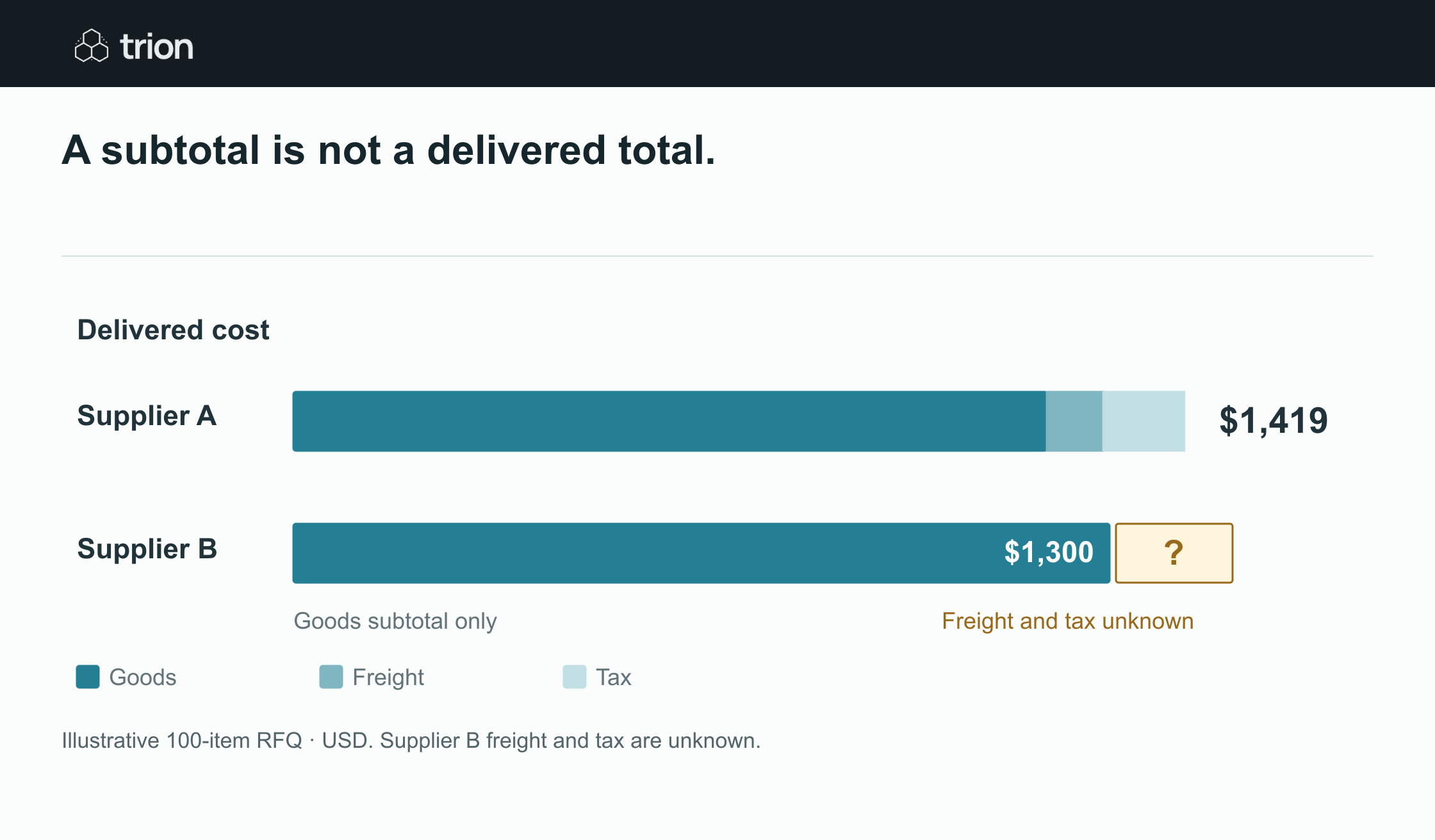

A subtotal is not a delivered total.
- Request
- 100 items, USD
- Supplier A goods
- $1,200
- Supplier A freight
- $90
- Supplier A tax
- $129
- Supplier A delivered total
- $1,419
- Supplier B goods
- $1,300
- Supplier B freight and tax
- Unknown; delivered total remains incomplete
View data
| Evidence | Meaning |
|---|---|
| Request | 100 items, USD |
| Supplier A goods | $1,200 |
| Supplier A freight | $90 |
| Supplier A tax | $129 |
| Supplier A delivered total | $1,419 |
| Supplier B goods | $1,300 |
| Supplier B freight and tax | Unknown; delivered total remains incomplete |
Illustrative 100-item RFQ · USD. Supplier B freight and tax are unknown.
Download imageFor different currencies, retain the original currency and amount. Add a reference conversion using an agreed rate source and date, and label it as an assumption. A converted comparison is not confirmation of the amount that will leave your bank account later.
Compare the terms beside the numbers
- Delivery: distinguish a dispatch promise from arrival at your location, and record what starts the lead-time clock.
- Payment: show the deposit, balance trigger, and any stated charges. A lower price with a larger advance payment creates a different decision.
- Warranty and substitutions: retain the supplied wording and flag differences for the person who can assess them.
- Validity: check whether the comparison is still based on a live quotation before approving the purchase.
A quote of “seven days after deposit” is not directly comparable with “fourteen days after purchase order.” Record the trigger, then ask whether your required date can be met under the intended payment schedule.
Resolve questions before declaring a winner
For Supplier B, a focused question is: “Please confirm freight to our delivery address, applicable quoted tax, and whether ten boxes contain 100 items in total.” Give the question an owner and keep the response linked to the comparison version. If the answer changes the quote, preserve both versions.
Use the quote comparison template for source values and normalized fields, and the supplier question log for unresolved items. Mark the comparison ready only when required costs and terms are known or a reviewer has explicitly accepted the remaining uncertainty. Automation can prepare this view; supplier selection and flagged exceptions still need an accountable human decision.