
Meta introduces Muse Wonder for longer agent tasks
Meta’s Muse Wonder announcement focuses on two problems in agent work: retaining useful context and carrying a difficult task through to completion. The practical test is how those capabilities handle changing instructions.
What is available now
The 12 October announcement makes Muse Wonder available through the Meta Model API and Muse Code, with Muse Wonder Full available to Muse Code subscribers. The consumer Muse rollout is forthcoming. Meta calls its cross-conversation context capability Active Memory and its sustained task execution capability Active Focus.
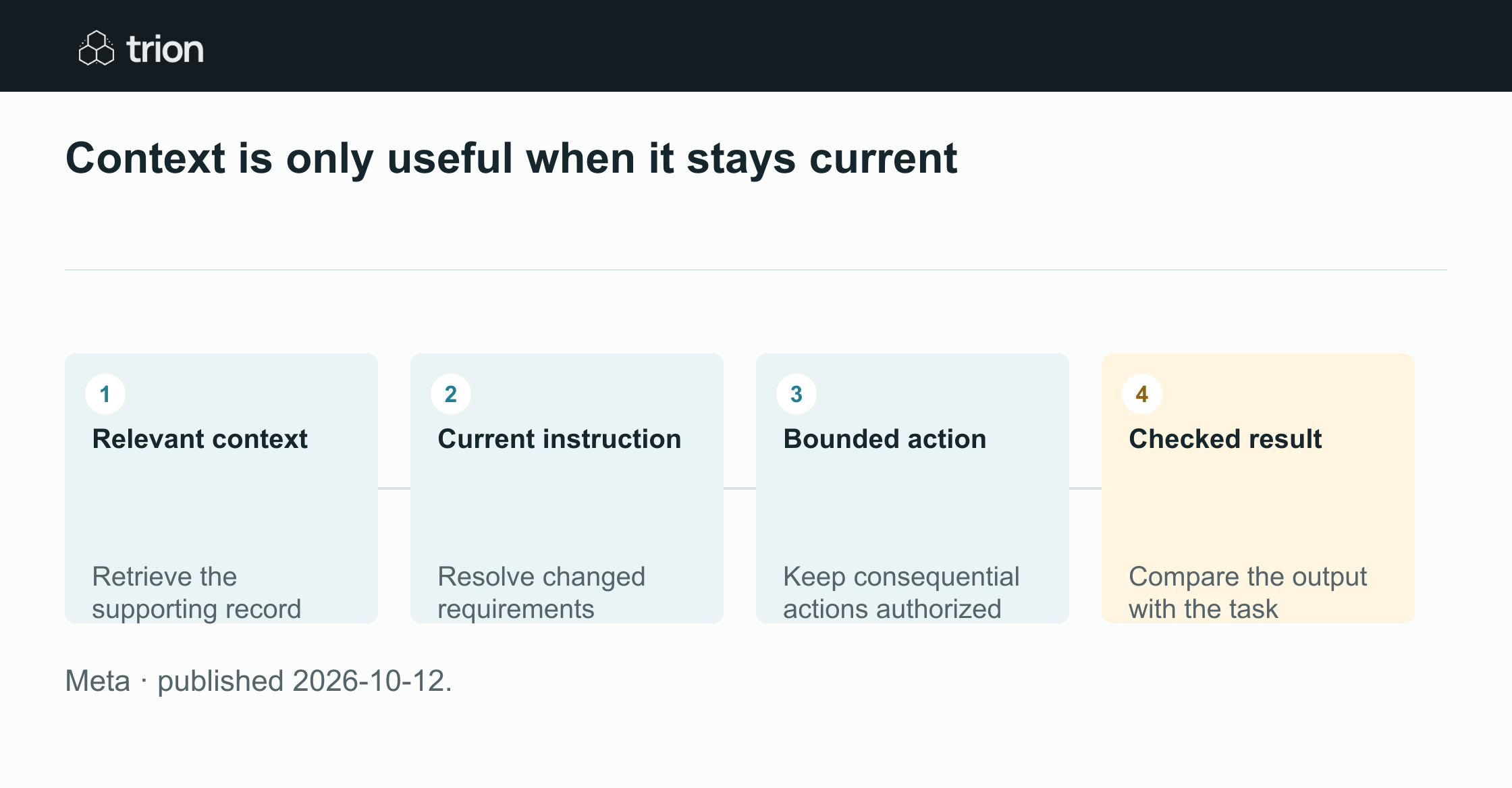

Context is only useful when it stays current
- Relevant context
Retrieve the supporting record
- Current instruction
Resolve changed requirements
- Bounded action
Keep consequential actions authorized
- Checked result
Compare the output with the task
- Relevant contextRetrieve the supporting record
- Current instructionResolve changed requirements
- Bounded actionKeep consequential actions authorized
- Checked resultCompare the output with the task
Meta · published 2026-10-12.
Those descriptions make memory and persistence reasonable evaluation targets; they do not settle whether a particular workflow is ready for unattended operation. A task can remain in progress for a long time while using an outdated requirement. A convincing final explanation can also hide a missing source or an uncompleted step.
Test a requirement that changes
A useful trial should involve a correction, rather than a single prompt with every fact supplied at once. Here is a proposed procurement exercise using non-sensitive sample documents. Define the expected outcome before the run so the evaluator does not reward a polished but incorrect comparison.
Establish a source
Provide a purchase requirement and two quotations. Ask for a comparison that cites the relevant document and separates confirmed costs from missing freight or tax. Keep the source versions visible to the reviewer.
Change one important fact
Replace the required delivery date or revise the quantity in a later conversation. Ask the agent to continue the comparison. Check whether it uses the current requirement and identifies conclusions affected by the change.
Inspect the finish
Compare each recommendation with the source documents. Require unresolved questions to remain unresolved and review any proposed external action separately. Record whether the agent actually produced the agreed deliverable or merely described how it could.
Treat remembered context as editable
A remembered preference and an approved commercial requirement have different authority. A team should be able to correct stale information, identify its source and prevent context from one customer or project from influencing another.
Include a second reviewer who did not write the original instructions. If that person cannot reconstruct why the recommendation changed, the workflow needs a clearer evidence trail, regardless of the model’s ability to sustain the task.
Original sources
- Meta: original announcementresearch.meta.ai